
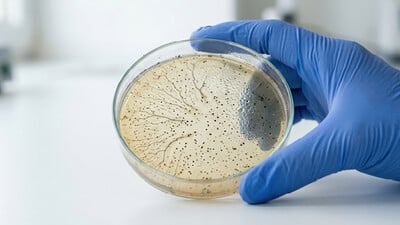
Medical Half the tooling, no manual assembly, and a whole sterilisation step designed out
One tool moulds dish and lid, closed by robot in the ISO Class 8 cell: half the tooling and a sterilisation step designed out.
Read the case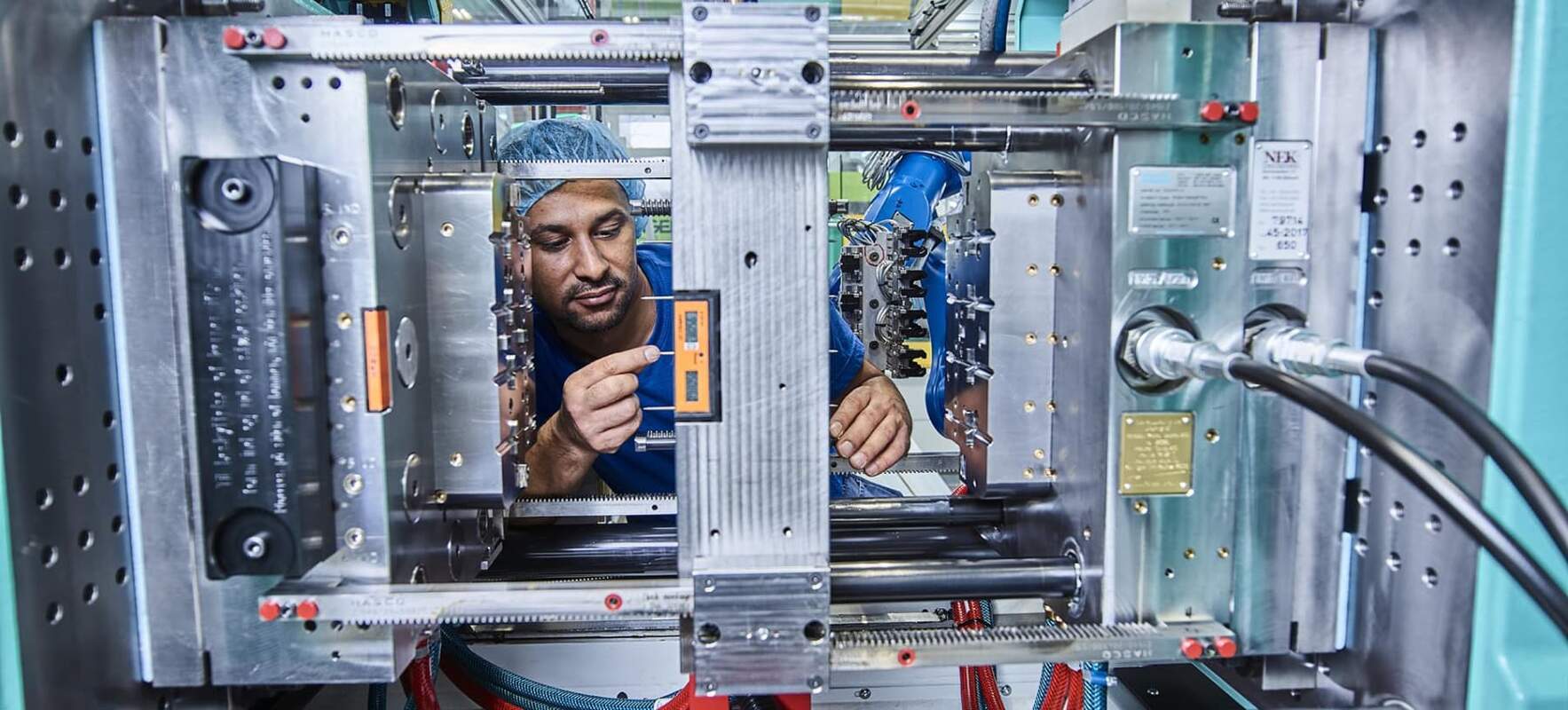
Advanced injection moulding for medical devices and demanding technical products.
In short: more than 70 years of injection moulding for medical devices and demanding technical products at Carmo: machines from 25 to 250 tonnes clamping force, and an ISO Class 8 cleanroom environment for injection moulding, pad printing and assembly.
Combining materials or integrating an insert? Go straight to the technique:
Carmo introduced one of the first industrial injection moulding operations in Denmark in 1952, and has run continuous production since. On the floor today:
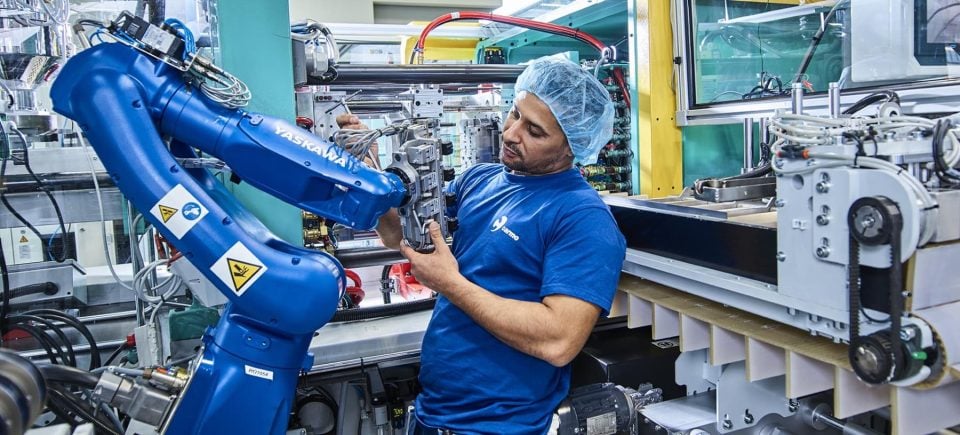
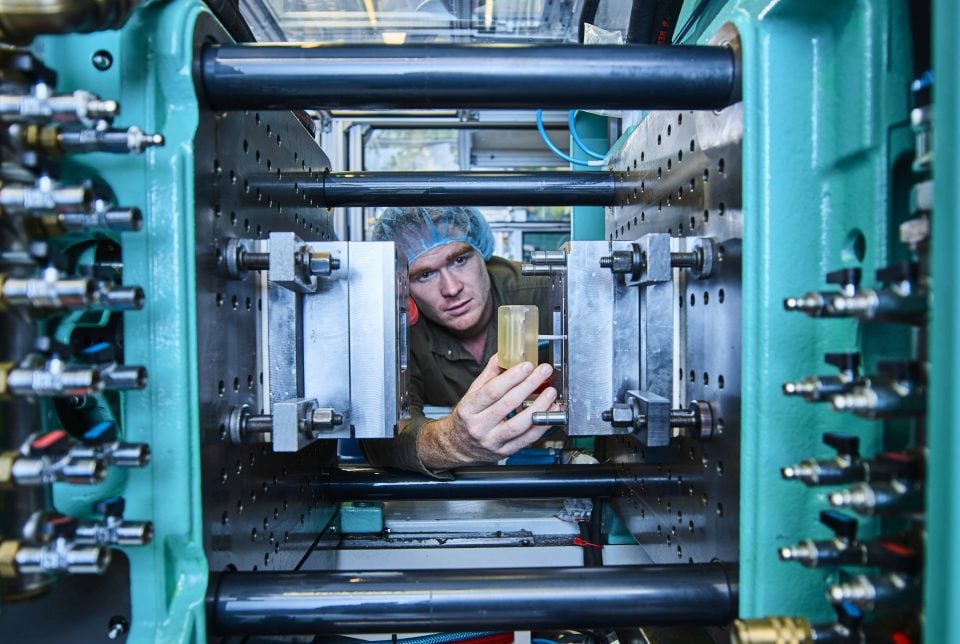
The engineers who run our production review your part for mouldability, material, tolerance realism and automation potential: the decisions that set piece price and yield for the life of your device. A design change at this stage costs a meeting; the same change after tooling costs steel and re-validation. The first question we ask is the simplest: can parts be removed or consolidated into one 2K moulding so an assembly step disappears? Manufacturing engineering at Carmo →
If your design might still change, don’t cut steel yet: functional prototypes moulded in your production material from a 3D-printed tool, in days; see how Carmo Print Moulding works.
Alongside single-material moulding, Carmo runs the processes that combine materials or integrate a component into one part:
Why it pays: a one-piece part removes the adhesive, the assembly step and their failure modes: fewer parts, fewer leak paths, fewer regulated-process variables in your device file. At end of life its polymers need a separation step before recycling; we weigh both with you, per part.
Material choice decides strength, flexibility, chemical resistance, sterilisation route and regulatory fit, so we settle it with you inside the design work, not after it. The working range:
| Material | Key properties | Joining | Typical use | Steam sterilisation | Gamma / E‑beam sterilisation |
|---|---|---|---|---|---|
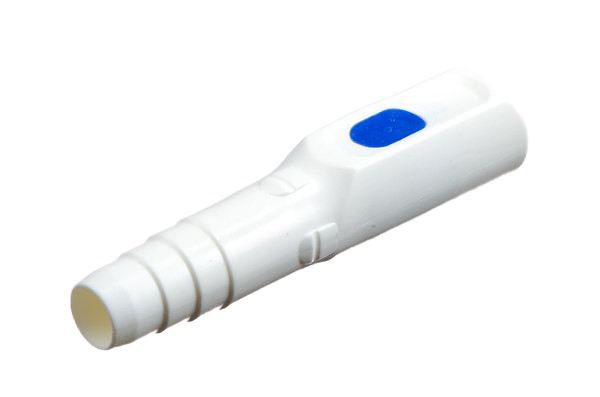
| PP | Low density, high chemical and fatigue resistance; withstands steam-sterilisation temperatures | Ultrasonic, mechanical | Housings, caps, tapered connectors | Yes | Limited ⚠ |
| PC | High impact strength with optical clarity; medical grades where the fluid path must stay visible | Ultrasonic, bonding, 2K | Transparent housings, connectors, sight components | Limited ⚠ | By grade |
| TPU / TPE | The soft component in a 2K construction; bonds chemically to compatible rigid partners; seals in TPE/TPU, not silicone | Bonded in-mould (2K) | Overmoulded seals, soft-touch sections, strain reliefs | By grade | Yes |
| PE (LD/HD) | Tough and low-friction, impact-resistant at low temperature | Ultrasonic, mechanical | Caps, shrouds, closures | No | Yes |
| ABS | Rigid and impact-resistant, easy to mould and print on; the rigid half in many 2K constructions | Ultrasonic, bonding, 2K | Housings, connectors, device shells | No | By grade |
| PS | Rigid and dimensionally stable, clear or opaque; economical for high-volume parts | Ultrasonic, bonding | Rigid components, splint and labware-type parts | No | Yes |
| POM | Dimensional stability and low friction; the mechanism material | Mechanical, 2K | Fasteners and moving mechanisms | By grade | No |
| PVC | Non-phthalate / DEHP-free medical grades, incl. Carmo’s own recipes; chemically resistant and flexible across a wide durometer range; matches PVC bag film | HF-weldable | Medical-bag ports, valves, connectors, eyelets | No | By grade |
| PVC/PUR | Tougher and more abrasion-resistant than PVC alone | HF-weldable | Load-bearing welded components | No | By grade |
Not listed? Ask. This is what we run most, not all we run; most of the grades we run are REACH-compliant, and we also work with and test bio-based materials. Take the columns as a starting point: we can propose candidate grades from production experience; the sterilisation process and its validation sit with you as the device manufacturer.
Carmo specifies the tool; a toolmaker we have worked with for years builds it, and we sign it off at FAT, SAT and run-in. What that looks like:
The tool is yours: you fund it and own it.
Every production tool is either hot runner or cold runner, a choice that drives both tool cost and cycle time, settled early in the requirements specification. Prototype tooling is the exception: Carmo Print Moulding tools are 3D-printed in-house, in days.

The final tool corrections happen during CPQ: shrinkage follows the processing parameters, so critical measurements are tuned with the toolmaker after the process is dialled in, not before.
The process window is set and documented, cycle time optimised, and quality, material and energy use brought under control.
For statistically demanding applications, CPQ extends to a formal DOE study with specialist partners.
Design, development and series production all sit inside the certified ISO 13485 scope: one system, no gap between them; only Print Moulding prototype lots sit outside it, by design. The system that documents your part for supplier qualification and customer audit is quality assurance at Carmo. What that means for your device file:
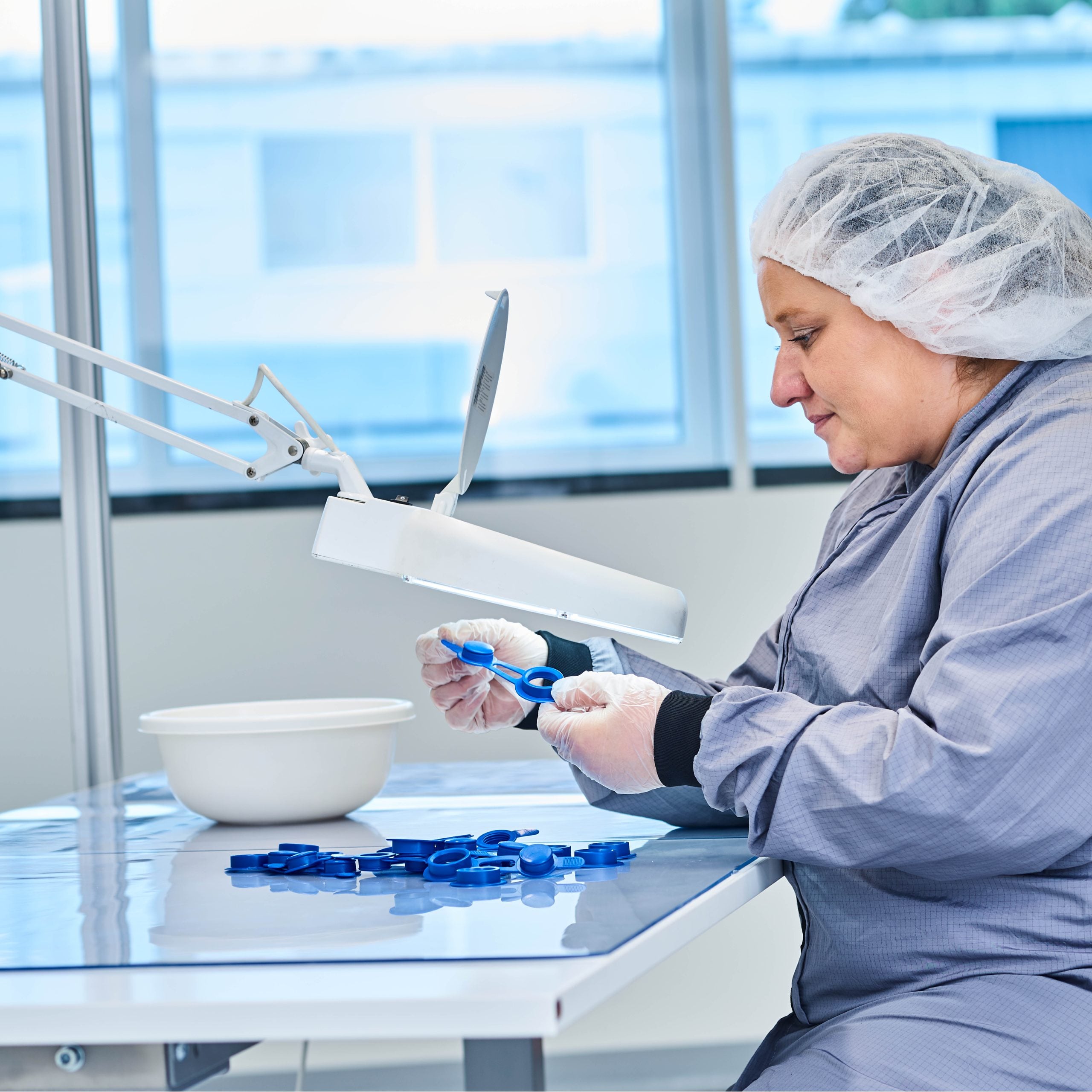
Our own component lines have been in continuous production for decades, designed, tooled and sustained at our own cost and risk: HF-weldable eyelets, and Fluid-bag ports and valves, connectors, flanges. There was no customer to hand a problem back to; we had to make it work. That experience is what goes into your part:
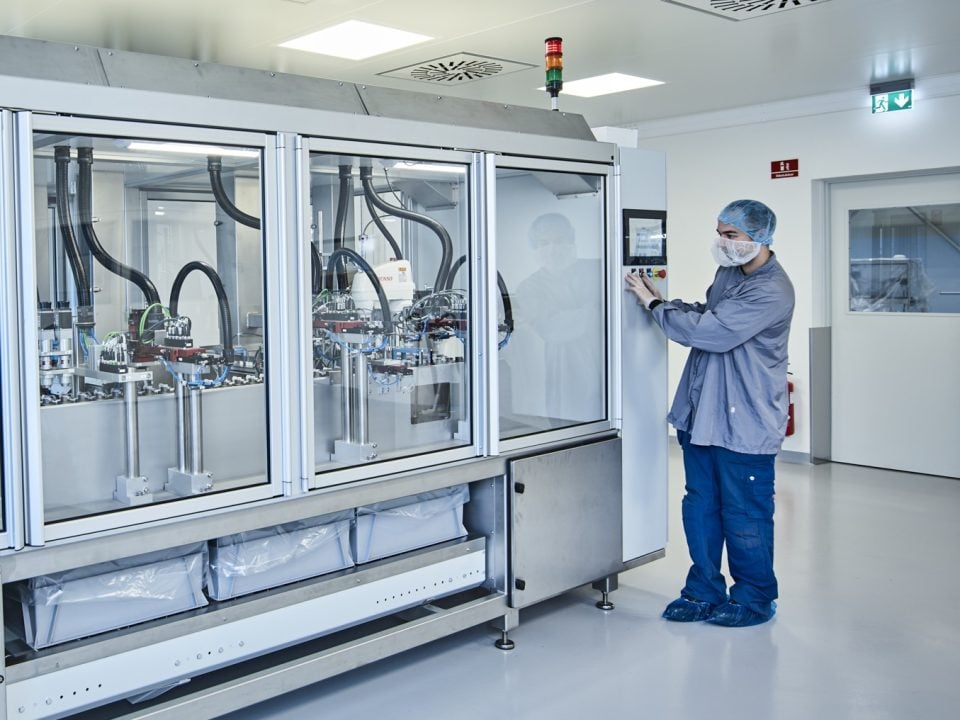
Moulding is rarely the last step. The team that qualified your process takes the part on to a finished, packed component, and scales it as your volumes grow:
The engineers who prototyped your part specify its tool, qualify its process and run its volume; nothing is handed over: that is how Carmo works as a development and production partner. It is why customers stay: many have worked with us for more than 30 years. Every project points to one goal: the part delivered as agreed, in the shortest sensible time to market.
Send the drawing, the failing part or just the problem. Email is fine, NDA first if you need it, and we’ll tell you within days whether we’d mould it, and how. Helpful to include: drawing or STEP file · material or its requirements · expected annual volume · sterilisation route · where the part sits in your device.

One tool moulds dish and lid, closed by robot in the ISO Class 8 cell: half the tooling and a sterilisation step designed out.
Read the case
Nine functional medical components in a medical-grade material: months taken out of a timeline that had already run long.
Read the case
Functional prototypes in the production material in 1–2 days, where a conventional mould tool takes up to six weeks.
Read the caseBoth. Carmo’s scalable production handles small-series runs economically and ramps to volume with the same engineering team: no handover between prototype, validation, and regulated volume production. This continuity matters most for medical-device OEMs whose regulated lifecycles run for years and for technical OEMs validating components in the field before committing to full volume.
Prototype tools, yes: 3D-printed in-house for Carmo Print Moulding. Series steel tools are built by a specialist toolmaker to Carmo’s requirements specification, and Carmo signs them off:
The full arc is on the injection moulding page.
Longer than most buyers expect: quality toolmakers typically guarantee around one million cycles, and a well-maintained tool runs to a multiple of that. What decides it:
Some of the tools behind Carmo’s own standard components have run for decades, maintained at Carmo’s own cost and risk; that experience is what Carmo brings to a customer’s tool at design stage: where a geometry will wear, which features drift first, what to specify so the tool stays capable.
There is no list price; the tool dominates the early economics. Cost is set by:
Before committing to a production tool, Carmo Print Moulding delivers functional parts in the production material in 1–2 days, so the design is settled before the tool is cut, and small series and bridge production stay economical.
Typically 6–18 weeks from design freeze to first parts, depending on complexity, the number of cavities and the material.
For medical components, process validation runs on top of that: installation, operational and performance qualification (IQ/OQ/PQ), typically 6–13 weeks. The span depends on the number of cavities, how many dimensions need validating, the tolerances, and the process capability (Cpk) requirements. It is planned in from the start.
6–12 months from project kickoff. Expedited projects have been delivered in 4 months, though what is achievable depends on the project and the complexity of the component. A complete cell (feeding mechanisms, the injection moulding tool itself, and post-processing such as pad printing and packaging) is an integration project rather than a tool order. Planning that horizon early is usually what separates a launch date that holds from one that slips.
Typically 6–60 seconds per shot for the kind of components Carmo makes. Cooling dominates, so wall thickness is the biggest single lever, then material and part geometry. The number of cavities then sets parts per hour.
Carmo Process Qualification (CPQ) is the structured run-in between a tool’s site acceptance test and the validation runs. Cavities are balanced and filling made uniform first; the process window is then centred so it absorbs normal batch variation in the raw material. Weight control catches overfilled and underfilled shots, and critical parameters are mapped with their influence at minimum, norm and maximum. Validation starts on a stable process.
By correcting the tool after the process is dialled in, not before. Shrinkage is strongly influenced by the processing parameters, so a tool corrected against an unsettled process is corrected against a moving target. Carmo runs the process window in first, measures the critical dimensions on real shots, and then makes the final subtle tool corrections with the toolmaker. Tool, process and measurement stay in one loop, with one team.
All production runs in Espergærde, Denmark. A sales office in France (Carmo SARL) and strategic partners in Sweden, Germany, the United States, Poland, and the United Kingdom extend commercial reach.
A deliberate choice; the numbers favour it:
The result: competitive pricing with better service and continuity; see when nearshoring to Europe pays off.
Yes, continuously since 2013. Carmo has held a certified quality management system since 1993; the certification migrated to ISO 13485 in 2013 and has been continuous since:
Carmo A/S's quality management system is certified to ISO 13485:2016 Medical devices quality management system by Bureau Veritas (accredited by DANAK), certificate no. DK020611. Scope: Design, development, manufacture and assembly of injection molded plastic components. Valid: 2. September 2026 – 1. September 2029.
All Carmo plastic components are manufactured under the same QMS and procedures.
Carmo is a component supplier; MDR legal-manufacturer responsibility rests with you as the OEM placing the finished device on the market.
More than 70 years of accumulated injection moulding process experience. Carmo introduced one of the first industrial injection moulding operations in Denmark in 1952 and has run continuous production since. Over the same period Carmo has served the medical-device industry without interruption for more than 60 years.
Two primary segments. Medical: medical-device OEMs across medical bags (urine, infusion, nutrition), identification bracelets, immobilisation equipment, urology, diagnostics, and surgical devices. Technical: applications across maritime, industrial, agriculture, cleantech, and rescue markets where components must extend end-product operating lifetime under harsh conditions.
Twenty- to thirty-year relationships are common in both segments. In the technical segment, components stay in service over long product lifecycles and customers don’t churn. In the medical segment, regulated OEM finished-device validation cycles reward long-term supplier stability: qualified suppliers stay locked in for the device’s regulated life.
Yes. This is where Carmo’s design and manufacturing tradecraft lives. Engineers with decades of production experience routinely re-engineer existing components to:
The case is strongest when you already have field experience with the part; design changes made early pay back in performance, quality and cost across the regulated life of your device. See the EYE-GO case.
Two levers, segment-aligned:
60% of surplus production material is recycled back into the supply chain. Carmo is among the first Danish plastics SMEs committed to the Science Based Targets initiative (SBTi 40001785): a 50% reduction in scope 1 and 2 emissions by 2030, in line with the Paris Agreement 1.5°C target.
Yes, but not readily. A part made of two materials, or of plastic around a metal insert, needs a separation step (mechanical or chemical) before its polymers can be recycled:
Material pairing and joining choices made at design stage can make later separation easier.
More than 80 years of continuous private ownership: one team from prototype to volume, no handover.
ISO 13485-certified quality management and an ISO Class 8 cleanroom environment: components with the documentation your audit asks for.
You bring the problem; we bring the know-how to solve it. We don’t walk away from the hard ones. Hear it from our customers.