

Medical Half the tooling, no manual assembly, and a whole sterilisation step designed out
One tool moulds dish and lid, closed by robot in the ISO Class 8 cell: half the tooling and a sterilisation step designed out.
Read the case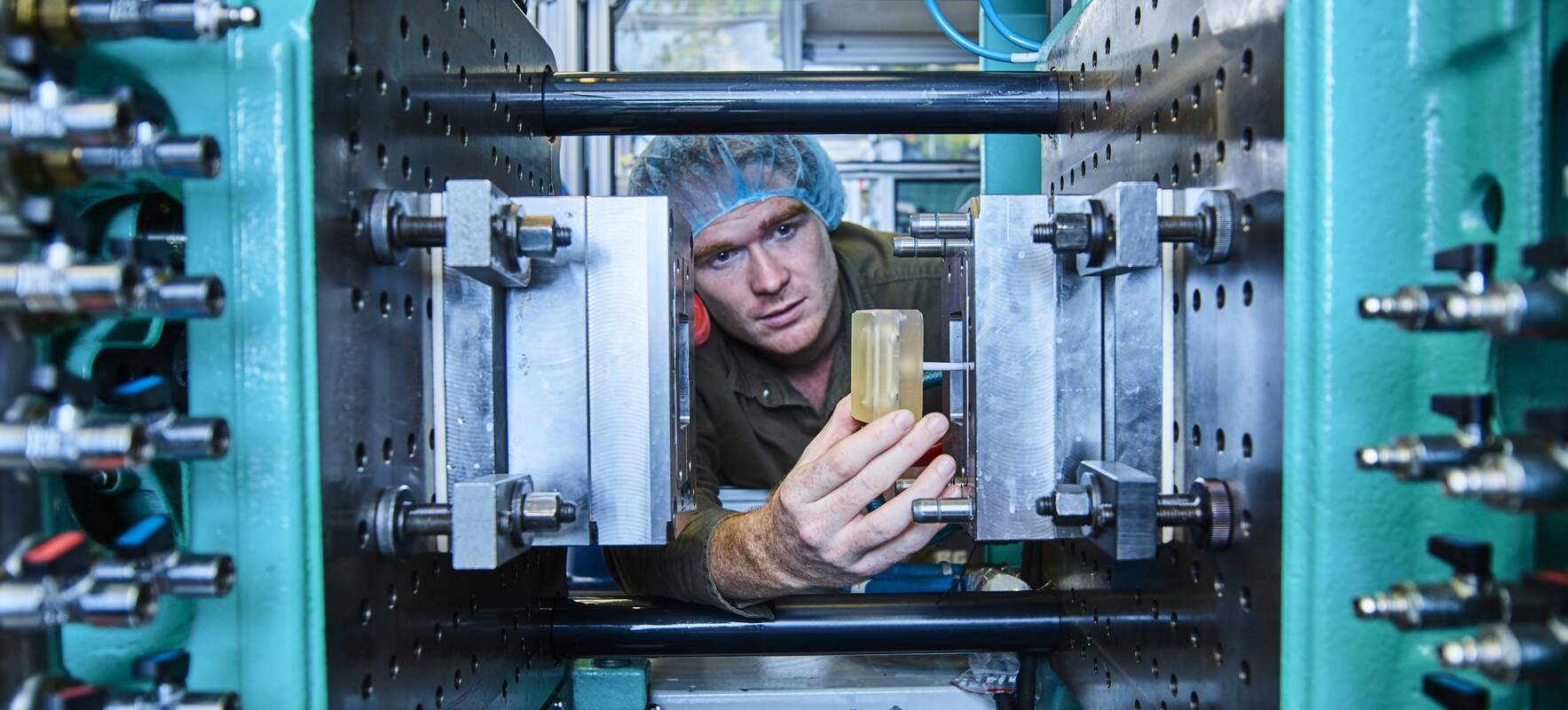
Functional prototypes in your production material, in days. Test the real part before steel.
In short: Carmo Print Moulding is Carmo's own hybrid of 3D printing and injection moulding: what you test at prototype is what you ship at volume, and the same engineering team carries your part into QMS-governed validation builds and volume production.
Carmo Print Moulding removes the usual trade-off between a fast part in a stand-in material and the right material after weeks of steel tooling: functional prototypes in your actual production material, in days, from 3D-printed tooling.
And as your European development partner, the same team carries the part from prototype to ISO 13485-governed volume, so there’s no supplier handover when you scale.

It’s the best of both worlds: additive manufacturing brings the right shape, fast; injection moulding brings the right material. Carmo’s own version of the process (Carmo Print Moulding) does both at once: functional prototypes moulded in your actual production material from 3D-printed tooling, so you get real parts in days rather than weeks, without committing to full production tooling.
Carmo Print Moulding: we 3D-print the mould tool, then injection-mould functional prototypes in the actual production material, the speed of 3D printing with the accuracy of injection moulding, ready for testing in days.
What is Carmo Print Moulding? Well, you've probably heard about so-called rapid prototyping. Frankly, it's nothing more than conventional 3D printing. Unfortunately, this is not always as fast as one might hope. Also, only a few particular materials are suitable for the process, making it extremely difficult to get accurate properties of the future product. Not to mention traditional prototyping with aluminium tools, which is even more time-consuming and costly. And this is where Carmo Print Moulding comes into play. We invented a much more rapid way to do rapid prototyping. And, by the way, a lot more cost-efficient too. The thing is, we 3D print prototyping tools, not prototypes. And then we injection mould prototypes into the right material. When the design is ready, it takes us just one day to 3D print the mould. Iterations, tests and experiments can then be completed quickly, flexibly and cost-efficiently. Years of experience enables us to develop smart and mature mould designs that ensure robust and durable components. Yes, it is just as good as it sounds. You get the speed of 3D print and the accuracy of injection moulded prototypes, all in the exact right material ready for testing. Take the best from both worlds in one innovative solution. Carmo Print Moulding: more rapid than rapid prototyping.
“Combining additive manufacturing with injection moulding is a turning point in product development: real flexibility in the design phase, faster to proof of concept, at a lower cost than was previously possible.”
Anders Johnsen, Head of Development & Technology, Carmo
Carmo Print Moulding bridges prototype and volume: a 3D-printed tool, your parts moulded in the final production material, so what you hold in days is a real part.
What you test at prototype is what you ship at volume.

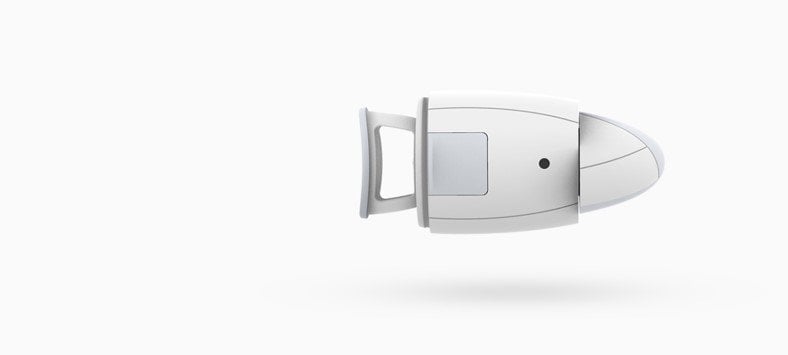
EYE-GO, a medical-device startup, needed a functional prototype fast, without tying up capital in steel tooling to get one.
“Speed and cost together are crucial for every start-up.”
Henrik Nagel, CEO, EYE-GO
Carmo Print Moulding runs the same medical- and technical-grade thermoplastics we mould in series production, holding micro-channels, tight tolerances and complex geometry. So whether it’s medical device prototyping or a demanding technical component, what you test behaves like the part you’ll ship.

Where does it sit against a direct 3D print, rapid tooling and aluminium tooling? The straight comparison:
| Direct 3D printing | Carmo Print Moulding | Aluminium (soft) tooling | |
|---|---|---|---|
| Part material | Printer resin or filament, not your production material | Your real production thermoplastic (1K/2K/3K) | Your real production thermoplastic |
| Time to first parts | Hours to a day | A few days | Weeks |
| Upfront tooling cost | None | Low (3D-printed tool) | Moderate (machined tool) |
| Functional & material test | Indicative only | Production-accurate | Production-accurate |
| Typical volumes | One-offs, form & fit | One part to a small series / bridge | Small to mid series |
| Best when | You need a quick shape or fit check | You need functional parts in the real material, fast, before committing to hard tooling | The design is locked and you need repeatable mid volumes |
Danish AM Hub has documented how Carmo Print Moulding cut the lead time for functional prototypes from around six weeks to two days.
If you only need a handful of parts, CNC machining in plastic is often faster. If the part needs to be elastomer or silicone, vacuum casting is usually the way. And if it needs to be metal, that sits outside injection moulding altogether: CNC or metal 3D printing is the right route.
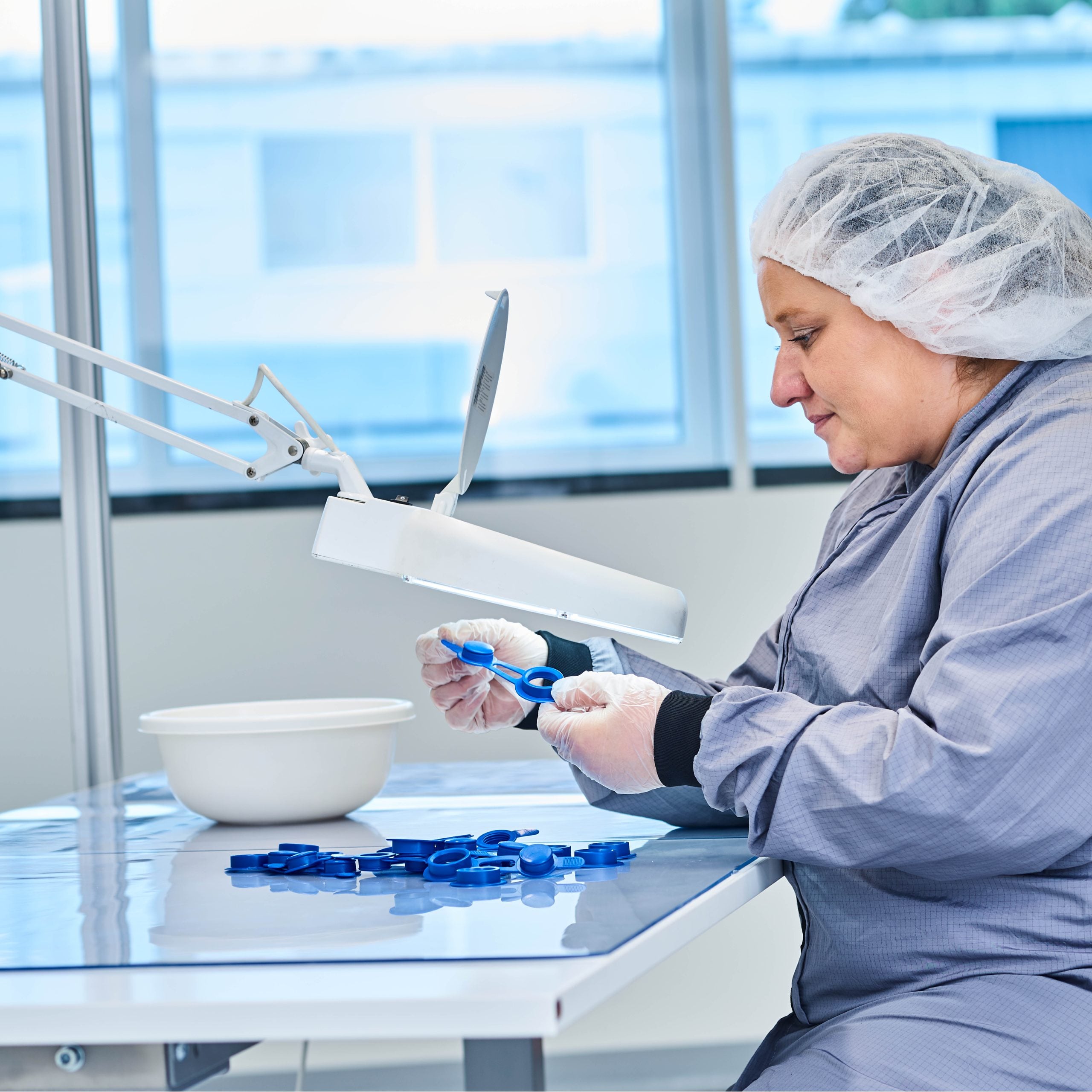
Carmo Print Moulding sits outside the certified ISO 13485 scope by design, so it stays fast enough to iterate. It stays controlled: the prototype phase runs on engineering-led documentation, agreed case by case with your team.
It’s a bridge, not a universal answer: the right tool for some jobs and the wrong one for others. Straight answer:
| It’s the right call when… | It’s not the right fit when… |
|---|---|
| you need a functional prototype in the real production material: material behaviour decides your test result | you only need a form-and-fit check: a standard 3D print is cheaper and just as good |
| you’re still iterating and not ready to commit capital to steel tooling, or need a small bridge series in the real material first | you’re going straight to high-volume production and don’t need the prototype or bridge phase: definitive steel tooling is the more economical route |
| you want one team from prototype to regulated volume, with no supplier handover when you scale | you need work inside the certified ISO 13485 scope from the very first build: Print Moulding sits outside it; the certified QMS engages from validation builds onward |
Not sure which side your project falls on? That’s exactly the conversation to have: tell us what you’re developing and we’ll say honestly whether Print Moulding fits.
Send the drawing or STEP file, the material or its requirements, and how many parts you need. Email is fine, NDA first if you need it; we'll tell you within days whether Print Moulding fits, and what the parts would tell you.

One tool moulds dish and lid, closed by robot in the ISO Class 8 cell: half the tooling and a sterilisation step designed out.
Read the case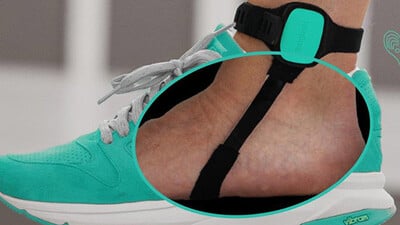
Nine functional medical components in a medical-grade material: months taken out of a timeline that had already run long.
Read the case
Functional prototypes in the production material in 1–2 days, where a conventional mould tool takes up to six weeks.
Read the caseDays, not weeks or months. Carmo’s design, tooling and moulding engineers work as one team: no handovers between separate vendors to pace the schedule. Typical functional prototypes in production material are delivered in days; exact turnaround depends on geometry complexity and material choice, settled in a scoping conversation; call +45 4912 2100 or email [email protected].
Typically 10–100 parts. To reach 1,000–50,000, an aluminium tool is the right choice.
Tool life is shortened by:
The crossover point moves with the job: printing a new tool is faster and cheaper than commissioning a new aluminium tool, so it often pays to print again, several times, before committing capital to aluminium. Carmo prints the tool in-house, so a new version can be in the machine within days.
Yes. The same 3D-printed tooling that delivers a one-off functional prototype also delivers small-series runs in the production material, useful for design-verification builds, clinical-trial supply (subject to the project-specific regulatory assessment above), pilot production, and bridge supply while definitive tooling is built. Volume thresholds depend on geometry, material, and tooling life; specifics settled during scoping.
No rigid MOQ. Development orders scope around your iteration plan; Carmo Print Moulding is built to deliver low-volume runs in production material economically, so a development engagement can run from single-digit functional samples through to small-series validation lots without changing the tooling approach. Specific volumes and pricing settled in scoping.
No. Carmo Print Moulding sits outside the certified ISO 13485 scope. Rapid-iteration prototyping with 3D-printed tooling runs on case-by-case engineering documentation, not under the standing QMS; the certified QMS engages only from validation builds onward. What bridges your project across that boundary is the team, not the QMS: the same engineers who run your Print Moulding iterations take the project into definitive tooling, run the validation builds, and ramp to QMS-governed volume production.
It depends. Clinical use of prototype components is case-by-case: applicability depends on the device classification, intended use, jurisdiction, and the regulatory pathway you’re pursuing. Carmo Print Moulding delivers prototypes in production materials, but it sits outside the certified ISO 13485 scope, and the legal-manufacturer decision about clinical use of any prototype lot rests with you as the OEM. The right next step is a scoping conversation against your specific application; case-by-case applicability is the only honest answer.
Yes. Carmo Print Moulding is Carmo’s own proprietary process, developed in-house. Customer-side IP (your product design, your trade secrets, your regulatory pathway specifics) stays yours under the engagement NDA.
Lightweight. Carmo signs a one-way NDA before scoping conversations that involve customer IP or clinical-context detail: a brief NDA covering the scoping discussion, followed by a mutual, project-specific agreement if the engagement is confirmed. Turnaround is typically days, not weeks. Contact [email protected] to start.
Your project doesn’t change hands between prototype and volume. The same engineering team that designs your Print Moulding tool and runs your iteration cycles also specifies the definitive injection-moulding tool, runs the validation builds, and ramps to ISO 13485-governed regulated volume production. Carmo Print Moulding compresses the iteration cycle in concept, design, and execution phases; when the design locks, the project transitions cleanly into definitive tooling and certified ISO 13485 scope: same team, no fresh supplier qualification.
Yes. Custom variants of Carmo’s standard technical-component catalogue (HF-weldable eyelets, valves, threaded nozzles, filler flanges, snap grommets) are an established engagement pattern. You bring the known standard product plus the specific geometry or material change you need; Carmo’s design and tooling team scopes the variant and Carmo Print Moulding delivers a functional sample in the variant’s intended production material before any definitive tooling commitment.
The EYE-GO case is on record. EYE-GO, a Danish medtech start-up, used Carmo Print Moulding to develop more than 20 functional prototype variants in roughly 8 months, at a 40-50% reduction in development cost relative to traditional prototyping. CEO Henrik Nagel of EYE-GO: “Speed and cost together are crucial for every start-up.” Carmo Print Moulding also serves established medtech OEMs developing new product lines; design consultancies engaging on behalf of clients; technical applications across maritime, industrial, agriculture, cleantech, and rescue markets; custom-variant work on standard components; and small-series bridge production where definitive tooling does not yet justify itself.
More than 80 years of continuous private ownership: one team from prototype to volume, no handover.
ISO 13485-certified quality management and an ISO Class 8 cleanroom environment: components with the documentation your audit asks for.
You bring the problem; we bring the know-how to solve it. We don’t walk away from the hard ones. Hear it from our customers.