
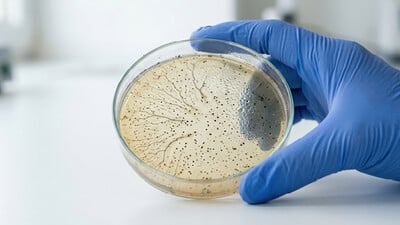
Medical Half the tooling, no manual assembly, and a whole sterilisation step designed out
One tool moulds dish and lid, closed by robot in the ISO Class 8 cell: half the tooling and a sterilisation step designed out.
Read the case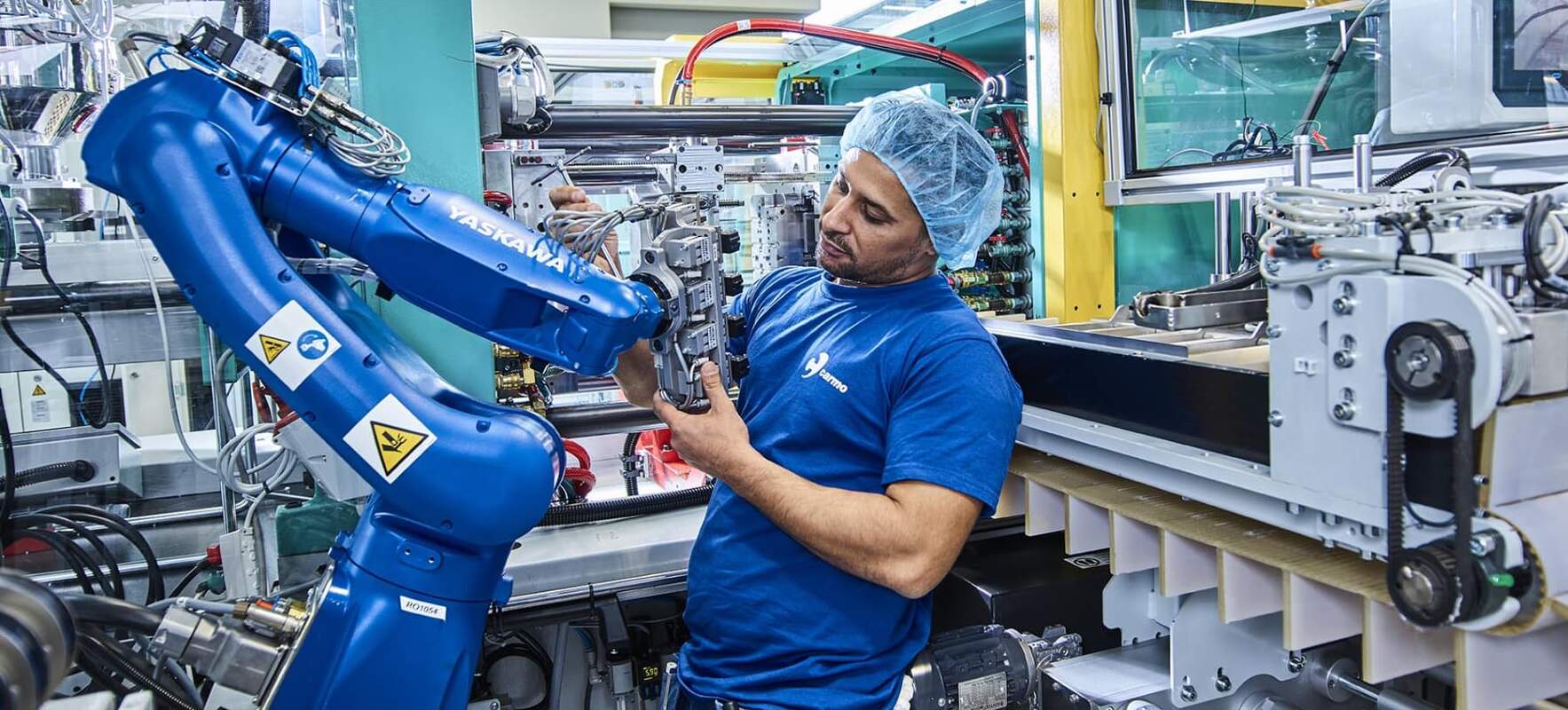
From the first parts to millions a year. Start where your numbers are. Carmo moves with you.
In short: Carmo scales a component from low-volume injection moulding to high-volume serial production: a low-capex start on a steel tool with one or two cavities and a robot-assisted cell, then more cavities and full automation as your numbers grow.
The quantity picks the technology; the team stays the same:
Every switch is planned from day one, so the process change is scoped before it is needed.
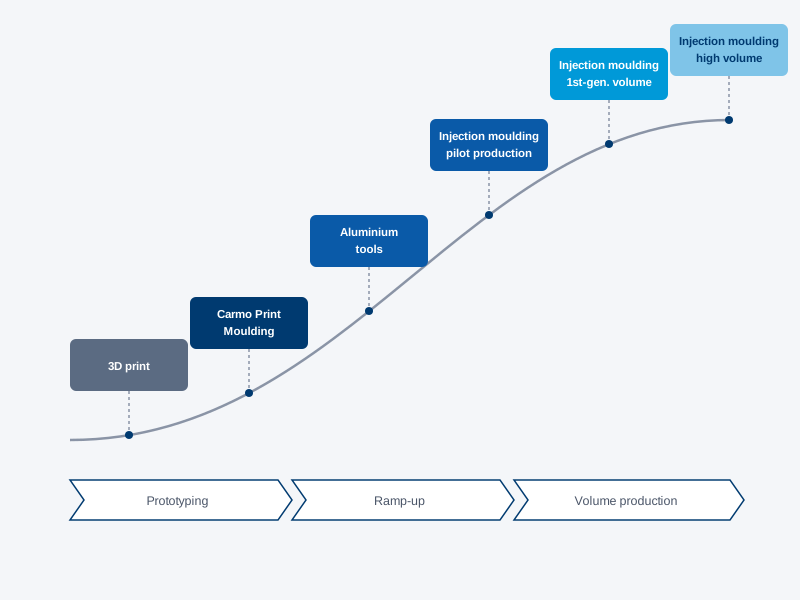
Each step trades a larger investment and a longer lead time for lower unit cost and higher output:
| Additive | Printed tool | Low-capex start | High volume | |
|---|---|---|---|---|
| Quantity | 1 to dozens a year | tens to hundreds | first volumes | thousands to millions |
| Tool | none | 3D-printed, in-house | steel, 1 to 2 cavities | multi-cavity steel |
| Automation | none | manual | cobot-assisted, semi-manual | automated cell, in-line QC |
| QMS | outside scope | outside scope | IQ/OQ/PQ validated | IQ/OQ/PQ validated |
When the launch date will not wait, market entry can start under an agreed interim control strategy, with tightened inspection and limited batch releases while the full IQ/OQ/PQ completes.
Few products need a sixteen-cavity tool on day one. They need parts, documented, at a cost that matches the volume:
The film shows a cell at work, from 0:12.
Your production runs on our own machines and cells, with automation built around your component rather than bought as generic line equipment:


Your project does not change hands at the scale-up boundary: one engineering team carries a component from concept to regulated volume production. The engineers who prototyped the part specify its tool, run the validation builds and produce it at volume:
“With our injection moulding machines, robotics and AM technology we have the technology, experience and know-how to find smart solutions. We are ready for your next project, no matter the size.”
Claus Steenstrup Ishøy, CEO
Tell us the component, where the project stands and the volumes you expect this year and in three years. We'll propose the route: additive, printed tool or steel.

One tool moulds dish and lid, closed by robot in the ISO Class 8 cell: half the tooling and a sterilisation step designed out.
Read the case
Nine functional medical components in a medical-grade material: months taken out of a timeline that had already run long.
Read the case
Functional prototypes in the production material in 1–2 days, where a conventional mould tool takes up to six weeks.
Read the caseYes, under controlled conditions agreed with your quality function. When a launch date is under pressure, supply can start while validation completes: the trade-offs are weighed together (bridge production on an interim tool, or early runs on the definitive tool with tightened inspection and limited batch releases), every deviation is risk-assessed, documented and agreed before parts ship, and the full IQ/OQ/PQ completes in parallel. Carmo has supported launches this way several times; it takes close cooperation, regulatory know-how and a team that can sprint inside the ISO 13485 QMS.
Yes. The machine fleet (more than 30 modern injection moulding machines, 25 to 250 tonne range) plus in-house prototyping, automation, and cleanroom assembly carry meaningful headroom for new project intake. Capacity planning is part of the scoping discussion; you get a clear view of available machine time before committing.
Flexibility comes from the integrated setup. If you have multiple projects at different lifecycle stages (one in development on Carmo Print Moulding, one in volume production, one in redesign), you deal with the same engineering team for all of them, and the same certified QMS governs each project from validation builds onward. The cost of moving a project between Carmo Print Moulding and definitive tooling (or back, for late-stage variants) is meaningfully lower than the equivalent supplier-switch cost would be.
Automation cells are designed around your components rather than as generic line equipment, so they can be reconfigured if the component changes. Most injection moulding cells are equipped with highly versatile 6-axis robots, and in-house design of advanced grippers gives high flexibility and responsiveness when variants or new launches need to come online quickly. Robotics in cleanroom assembly supports process repeatability without locking the line to a single product: automation-grade throughput on stable products, fast reconfiguration on variants and new launches, all under one engineering function.
Both. Downstream assembly, inspection, printing, and packaging happen in ISO Class 8 cleanrooms alongside moulding, all under the certified ISO 13485 QMS. A component can move from raw material through final packaged form without leaving Carmo or its quality system, useful both for medical regulatory documentation and for shortening your logistics chain.
More than 80 years of continuous private ownership: one team from prototype to volume, no handover.
ISO 13485-certified quality management and an ISO Class 8 cleanroom environment: components with the documentation your audit asks for.
You bring the problem; we bring the know-how to solve it. We don’t walk away from the hard ones. Hear it from our customers.