
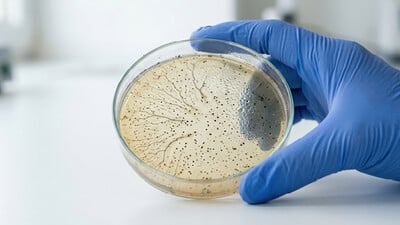
Medical Half the tooling, no manual assembly, and a whole sterilisation step designed out
One tool moulds dish and lid, closed by robot in the ISO Class 8 cell: half the tooling and a sterilisation step designed out.
Read the case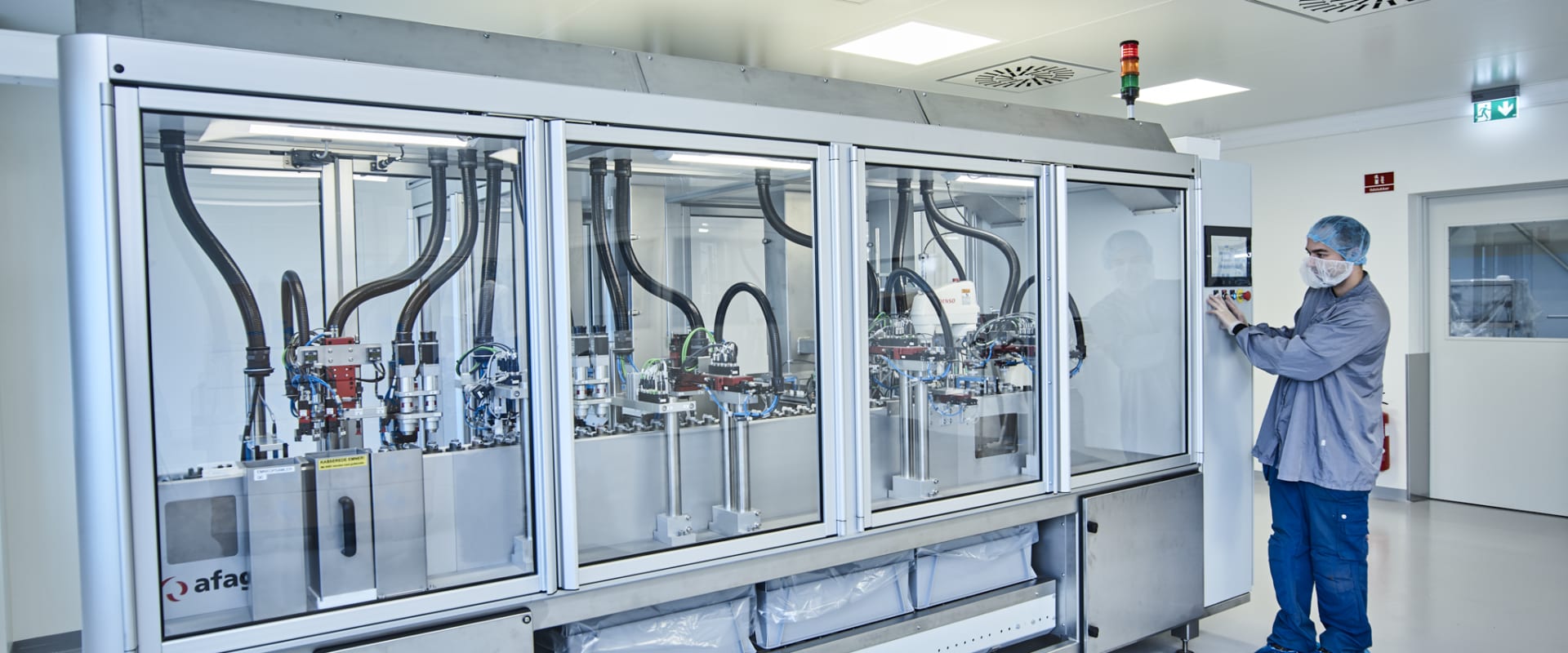
Moulding, assembly, printing and packing. Over 30 years of cleanroom production in Denmark.
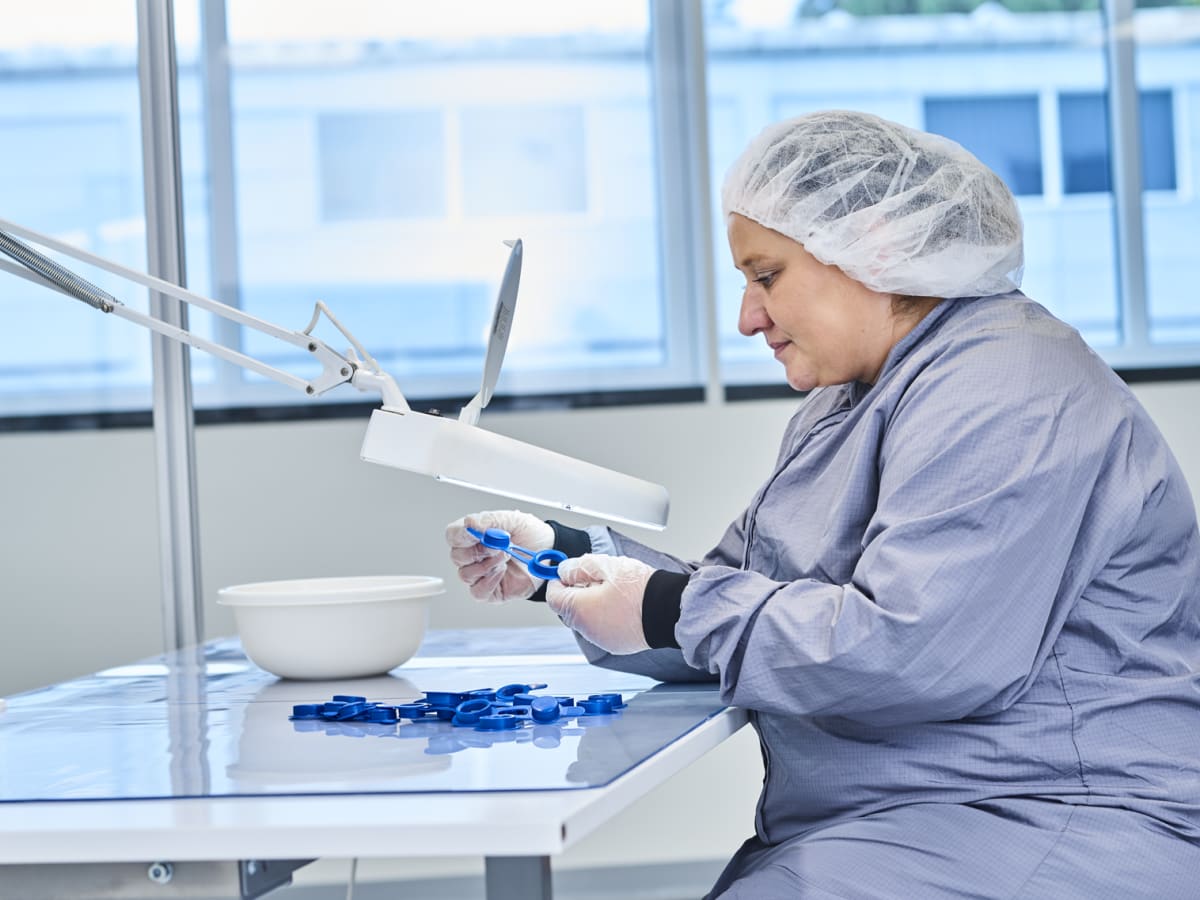
In short: Carmo has produced medical components in an ISO Class 8 cleanroom environment for more than 30 years: injection moulding, then assembly, inspection, printing and packaging, in Espergærde, under a quality management system certified to ISO 13485 since 2013.
Medical-device OEMs first: medical bags (urine, infusion, nutrition), identification bracelets, immobilisation equipment, and components for urology, diagnostics and surgical devices. Many customers have run the same component on the same registered device through Carmo’s cleanroom for 20 to 30 years. When annual volumes grow, the route is more cavities and automation: see scalable production at Carmo.
Technical components with contamination requirements (sealed assemblies, optical or sensor parts, high-purity industrial uses) run through the cleanroom case by case, settled during scoping.


A component can move from raw material to its packed form without leaving a classified environment. For supplier qualification and audit, that is one supplier to qualify, one QMS and one document set to file, from one development and production partner:
ISO Class 8 (the former Class 100,000 under FED-STD-209E) is a state, not a certificate on the wall. It is held by routine:
Two further environmental controls sit outside the ISO 14644 classification: bioburden monitoring and regular sample-based gloved-fingertip (finger-dab) testing.
The validated ISO Class 8 cleanrooms cover assembly, inspection, printing and packing; the moulding cells run in a classified ISO Class 8 cleanroom environment to the same standard.
Tell us the component, the annual volume and whether it is assembled, printed or packed. We'll say which cells and which cleanroom it would run in, and what documentation comes with it. Running a supplier qualification? Tell us; NDA first if you need it, and a drawing or questionnaire by email ([email protected]) is fine.

One tool moulds dish and lid, closed by robot in the ISO Class 8 cell: half the tooling and a sterilisation step designed out.
Read the case
Nine functional medical components in a medical-grade material: months taken out of a timeline that had already run long.
Read the case
Functional prototypes in the production material in 1–2 days, where a conventional mould tool takes up to six weeks.
Read the caseThe records stay at Carmo; what ships is a Certificate of Conformity (CoC), and a Certificate of Analysis (CoA) where agreed. Component-level traceability is part of the standard documentation set: batch records, in-process controls, material-lot traceability, and post-production inspection data are all maintained under Carmo’s certified ISO 13485 QMS, held at Carmo and open to your audit. The documentation depth is sized for medical-OEM supplier qualification and customer audit.
Routine internal particle-count monitoring at the standard size bands (0.5 / 1.0 / 5.0 µm) is complemented by annual external verification by a specialist. In addition, Carmo runs regular sample-based gloved-fingertip (finger-dab) testing as a complementary contact-monitoring control. Action limits are set below acceptance limits, so deviations are surfaced and corrected before they reach a classification breach. Bioburden and these contact checks are performed as separate environmental controls, not part of the ISO 14644 classification.
Medical-device OEMs first, across medical bags (urine, infusion, nutrition), identification bracelets, immobilisation equipment, urology, diagnostics, and surgical devices. Many customers have run the same components on the same registered device through Carmo’s cleanroom for 20 to 30 years.
Yes, on a case-by-case basis. Some technical applications require cleanroom-grade contamination control: components destined for sealed assemblies, optical or sensor applications, or high-purity industrial uses. Whether a non-medical application runs through the cleanroom is settled during scoping.
Yes. All cleanroom production is in Espergærde, Denmark, in the same operation as design, tooling engineering, moulding and automation.
Carmo has operated cleanroom production for the medical-device industry for more than 30 years. The 2018 site expansion added approximately 1,000 m² of additional production space and 200 m² of additional ISO Class 8 cleanroom capacity, roughly doubling the production footprint. Carmo’s QMS has been continuously ISO 13485-certified since 2013.
More than 80 years of continuous private ownership: one team from prototype to volume, no handover.
ISO 13485-certified quality management and an ISO Class 8 cleanroom environment: components with the documentation your audit asks for.
You bring the problem; we bring the know-how to solve it. We don’t walk away from the hard ones. Hear it from our customers.