
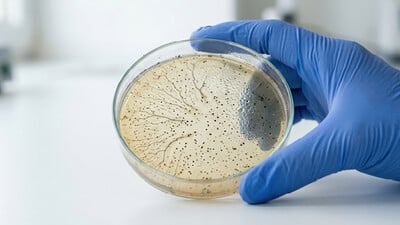
Medical Half the tooling, no manual assembly, and a whole sterilisation step designed out
One tool moulds dish and lid, closed by robot in the ISO Class 8 cell: half the tooling and a sterilisation step designed out.
Read the case
Some parts should never see a mould. We produce them additively, and guide you to the right technology.
In short: additive manufacturing at Carmo means finished parts, not only prototypes: customised parts in batches of one, very small series, and geometries no mould can release. A part that outgrows printing moves to injection moulding, a switch planned from the start.
Where a mould is the wrong tool, we produce the part additively. Three cases:
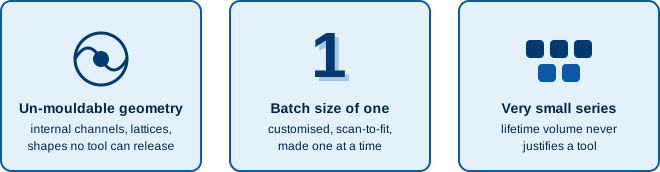
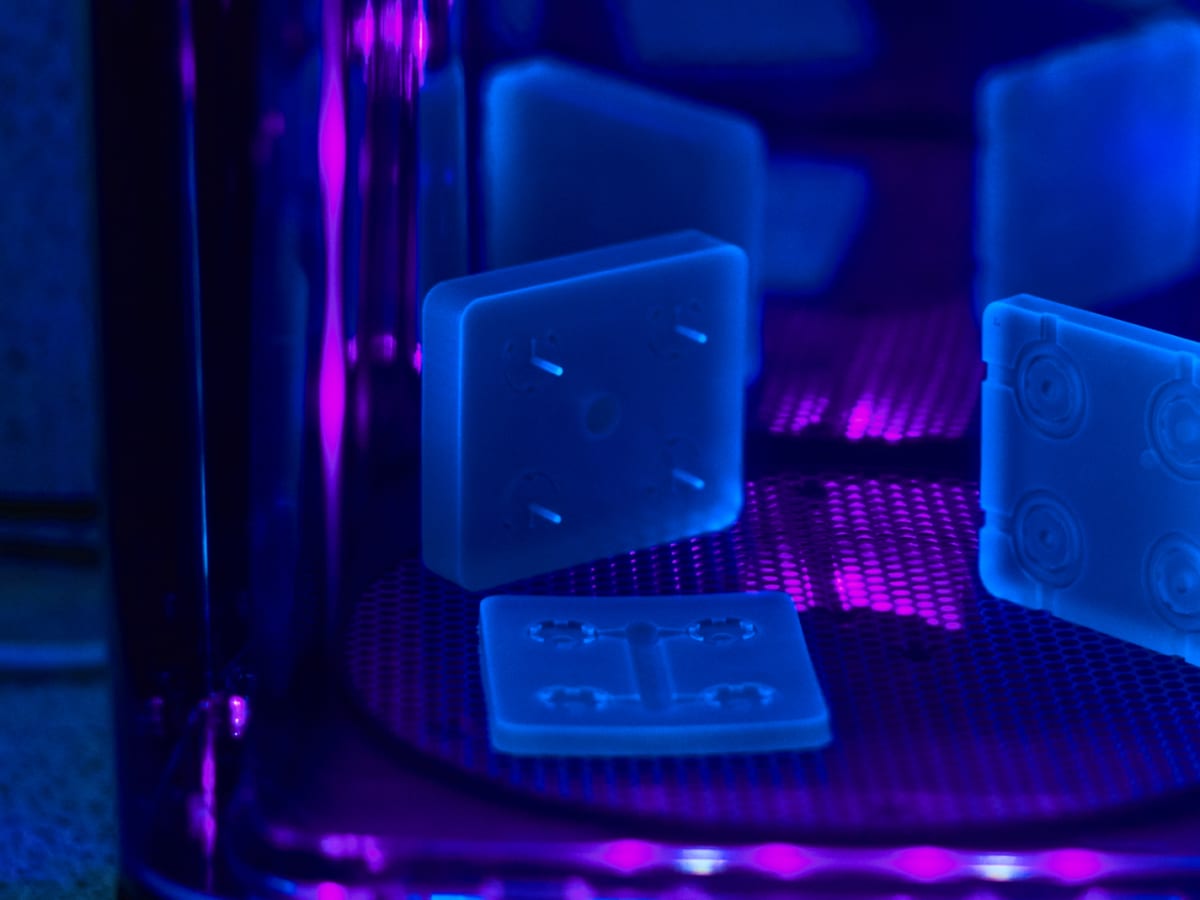
Our printers support the moulding line, and they do a second job: finished parts.
For additively produced parts, documentation and traceability are agreed per project. The certified QMS engages where a part moves to injection moulding. If your volumes already point to a tool, start on the moulding side: injection moulding of plastic components.
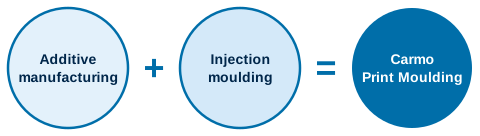
When the part will be moulded but the design might still change, we 3D-print the tool and mould the part in your actual production material, so you test function and fit on real parts before any capital goes into steel. That is Carmo Print Moulding, our own hybrid of additive manufacturing and injection moulding. How Carmo Print Moulding works →
The quantity picks the route. Start where your numbers are today and move up when they grow. One engineering team carries the part across the switch: that is how Carmo works as a development and production partner.
| Additive production | Printed tool (Carmo Print Moulding) | Steel tool | |
|---|---|---|---|
| Best for | one-offs, customised, tiny series | prototypes, pilot and bridge runs | series production |
| Quantity | 1 to a few dozen a year | tens to a few hundred | thousands to millions |
| Geometry | any shape, even un-mouldable | mouldable | mouldable, tool-optimised |
| Material | limited palette | your production plastic | your production plastic |
| Cost | no tooling, high per part | low tooling, moderate per part | tooling, lowest per part |
| First parts | days | days | weeks |
| ISO 13485 scope | outside | outside | inside, from validation builds |
Volumes growing? The switch to a printed tool or steel is planned as a process change from day one. Where it sits on the volume curve: scalable production. Where your specification requires it, the moulded part is then produced in Carmo’s ISO Class 8 cleanroom environment.
Send the part or the idea and the quantity you expect. We'll tell you whether it should be printed, moulded from a printed tool, or moulded from steel, and what each route costs you over the product's life.

One tool moulds dish and lid, closed by robot in the ISO Class 8 cell: half the tooling and a sterilisation step designed out.
Read the case
Nine functional medical components in a medical-grade material: months taken out of a timeline that had already run long.
Read the case
Functional prototypes in the production material in 1–2 days, where a conventional mould tool takes up to six weeks.
Read the caseWhen the quantity, the geometry or the pace of change would waste a tool: batch-of-one and customised products, series too small to pay for tooling, and geometries no mould can release. It also covers the Carmo Print Moulding cases: design-verification builds, late geometry tweaks and short pilot runs before a tool commit. Definitive steel tooling becomes the right answer once the design is locked and lifetime volume justifies the up-front investment.
Rapid tooling means making the mould quickly, often by 3D-printing the tool itself, so you can injection-mould real parts in days instead of waiting weeks for a machined steel tool. Rapid prototyping is the goal: a functional part, fast. Rapid tooling is one way to reach it. Carmo’s own method, Carmo Print Moulding, prints the tool and moulds your part in its actual production material, so what you test at prototype is what you ship at volume.
It depends on the project. Additive manufacturing can compress the development cycle for medical components by delivering functional prototypes in production materials early; Carmo Print Moulding is the path most medtech-development projects use for this. Additively produced end-use parts sit outside the certified ISO 13485 scope. Whether prototype or printed components may be used in clinical testing or a regulated submission is your call under your QMS, made case by case on device classification, intended use, jurisdiction and pathway; regulated series parts move to injection moulding, where the certified QMS engages. The right next step is a scoping conversation against your specific application.
More than 80 years of continuous private ownership: one team from prototype to volume, no handover.
ISO 13485-certified quality management and an ISO Class 8 cleanroom environment: components with the documentation your audit asks for.
You bring the problem; we bring the know-how to solve it. We don’t walk away from the hard ones. Hear it from our customers.