
Navigraff: Months out of the development timeline
Navigraff
Nine functional medical components in a medical-grade material: months taken out of a timeline that had already run long.
How Carmo and Navigraff worked together to develop and industrialise a custom component, a look at the concept-to-production partnership behind the Navigraff case.
Transcript
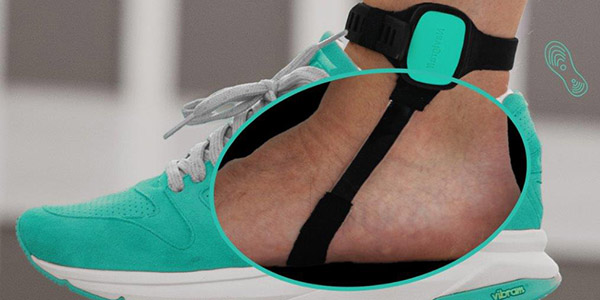
My name is Frederik Jakobsen. I am COO at Navigraff. Navigraff is a company, based in Aalborg. We have several different companies under the Navigraff brand. Navigraff. One of them is our stretch sensor used to measure navicular drop. also known as foot drop. My name is Tobias. I am a Development Engineer here at Carmo. Carmo is a company, primarily working with injection molding. But in addition to that, we also have a 3D printing department. That's where I work. We reached out to Carmo because they already supply components to the medical industry. Because they already supply components to the medical industry, they already work with medically approved components. I is important to us because our product needs CE marking and MDA approval. That's why it's important to us not only that we can get the product, but also the documentation required for regulatory approval. The advantage of 3D printing compared to using injection moulds is a twenty percent cost saving. The benefit for us has been that we can get a component quickly and at a competitive cost, rather than paying twenty times more for injection moulds for a product that may still require modifications. This is where 3D printing has really, made a significant difference for us, so that we can see exactly what we're working with, and make changes quickly and get a new version produced. In this case, it's not certain that we would have taken on the project. We have quite strict product requirements when it comes to conventional injection moulding. Getting started with steel moulds is both expensive and resource-intensive. Thanks to our 3D printing capabilities, we were able to help a customer like Navigraff get their production up and running much more easily. We needed a locking mechanism to hold the stretch sensor in place. I had a meeting with Carmo During that meeting which took less than half an hour, we sketched out the concept on a piece of paper. Three weeks later, I had a finished produkt inklusiv dokumentation. So going from idea to implementation in just three weeks was really impressive. Navigraff is a classic example of a customer that comes to us with a challenge. It may be that they need help with product design. And that's where we can help define what a component should look like, so that it can be manufactured later on. We can also help identify the right materials from the start. From my perspective, it has been a great experience. We have had a good and open dialogue right from the start. The journey from concept to finished product is very short. You get to speak with the right people when you come here. And it doesn't matter what level of the organisation you speak to. Everyone understands the task at hand. And if you're not quite sure what to do, you simply ask for help. It's been a great collaboration, and I can highly recommend them to others.
The challenge
Navigraff set out to measure something the field finds genuinely hard to capture: how the foot actually moves during natural activity — running on uneven ground, contact sport, the movements a lab can’t easily reproduce. Their answer was a stretch sensor that has to sit on the foot and keep working through all of it, which puts real demands on the hardware around it.
The company had built the technology and the software themselves — a long, resource-heavy effort that included an earlier, failed attempt to finish the product with another partner. As a medical device, the sensor’s components were also subject to strict constraints on materials and production. Navigraff needed a manufacturing partner who could move quickly without compromising on either.
We find it incredibly hard to study the foot’s movements when we perform natural movements like running in the woods or contact sport.
Frederik R. Jakobsen, partner, Navigraff
We’d spent an enormous amount of time and resources developing the technology, so it was a real blow when it didn’t come together.
Frederik R. Jakobsen, partner, Navigraff
The solution: Carmo Print Moulding
Rather than commit to a production tool up front, Carmo combined 3D printing with injection moulding — the method now called Carmo Print Moulding — to custom-design and produce nine small plastic components. 3D-printed tooling makes it possible to test functional parts in a material equivalent to the finished product, in days rather than weeks, and to iterate the design before any production tool is cut. The parts were made in a medical-grade material suited to the device’s requirements.
With 3D printing and injection moulding we can cut months off the development time and keep the costs down.
Tobias Kristensen, development engineer, Carmo
In recent years we’ve taken enormous steps in 3D printing, so we can now also help manufacturers of medical devices.
Tobias Kristensen, development engineer, Carmo
The result
The combination took months out of a development programme that had already run long — and kept the cost down. Navigraff got functional components in a representative material, fast enough to keep the project moving.
The value to the customer
This is the model Carmo is building more of: working alongside the customer across the whole arc — design, development and on into production — on one Danish site, with one engineering team. For a developer who had already lost time to a handover that didn’t hold, that continuity is the point. The fast, 3D-print-led development phase sits ahead of the certified path; when a design is ready to scale, the same site takes it into volume production under Carmo’s ISO 13485-certified quality system — with no change of supplier at the prototype-to-volume boundary.
The Navigraff project is exactly the kind of collaboration we’ll be doing more of.
Tobias Kristensen, development engineer, Carmo
See how we take a concept to volume production: one site, no handover.


